


Catch the Solar Wave: Solar & Battery Storage for Haywood County Homes and Businesses
Save tens of thousands of dollars. Power through storms. Lower your emissions. Solar energy is transforming homes and businesses across Western North Carolina, and Haywood County is leading the way.
Financial Considerations: Costs and Benefits
Solar Panel System Costs
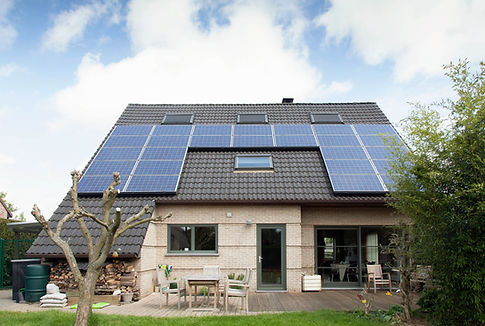
A fully installed residential rooftop solar system generates between 4kWh and 10kWh. Prices range from $6,000 to $42,000, with $22,000 as the average.
However, savings add up fast. On average, your system pays for itself in 10 years through electricity bill savings. After that, you'll produce essentially free energy. Over a 30-year lifespan, most homeowners save around $61,000.
Battery Storage Costs
Similarly, a 10kWh battery ranges from $8,000 to $17,000 installed, depending on the brand. Higher-quality batteries cost more upfront, but they offer longer warranties and extended life.
As a result, your battery typically pays for itself in 6 to 11 years. From there, you gain free nighttime power and outage protection. With smart energy management, you can even sell excess power back to the grid.
Flexible Ways to Go Solar
For homeowners who want lower upfront costs, leased solar is a smart option. It locks in low electricity rates with little to no down payment.
Meanwhile, energy demand is rising fast, driven largely by data centers. Experts forecast sharp price increases over the next five years. Locking in your rate now protects you from future spikes.
Additionally, solar loan programs work much like car loans, making ownership accessible. While buying delivers the greatest long-term savings, leasing still saves thousands with minimal upfront investment. Recent studies also show solar adds significant resale value — up to $79,000 for larger systems.
Energy Resilience: Why Solar Strengthens Your Home
-
Enhanced energy security. Solar reduces your reliance on the centralized grid, especially during emergencies and severe weather.
-
Stronger grid outage protection. Battery storage keeps essential power running overnight, without depending on generator fuel.
-
Built-in climate adaptation. Solar systems are engineered to perform reliably even during extreme heat events.
-
Community-driven resilience. Microgrids combine solar power with community engagement, strengthening energy security for entire neighborhoods.
Environmental Benefits of Solar Energy
1. Cutting Greenhouse Gas Emissions
Burning coal and natural gas releases large amounts of CO2 and methane. These pollutants can linger in the atmosphere for up to 150 years. Solar energy, by contrast, generates electricity with zero direct emissions.
In fact, a fully solar-powered home removes about 8.5 metric tons of CO2 every year. That's equivalent to taking two cars off the road, or saving 400 trees annually. Over a 30-year lifespan, that adds up to 255 metric tons of emissions avoided.
2. Improving Regional Air Quality
Fossil fuel combustion contributes heavily to smog and respiratory illness, particularly in urban and industrial areas. Prevailing winds can also carry these pollutants far beyond their source. Choosing solar helps protect air quality across Western North Carolina.
3. Conserving Water Resources
Unlike fossil fuel power generation, solar energy systems require little to no water to operate. This makes solar a smart, sustainable choice for water-conscious communities.
4. Mitigating Climate Change
Solar power, alongside wind and hydro energy, plays a critical role in slowing climate change. Together, these renewable sources help reverse extreme weather, sea level rise, and ocean acidification.
5. A Truly Sustainable Energy Source
Solar energy is renewable, abundant, and directly harnessed from the sun. Fossil fuels, in contrast, are finite and environmentally costly to extract.

Understanding the Environmental Cost of Solar
Every solar system carries some environmental cost, from manufacturing to installation and recycling. Even so, a typical residential system pays back its environmental cost within one to four years. After that, you gain 26 to 29 years of completely clean energy. As manufacturing and recycling technology improve, this environmental cost continues to shrink.
In short: solar energy delivers profound environmental benefits. By switching to solar, homeowners and businesses save money while helping build a healthier, more sustainable Western North Carolina.
Advantages at a Glance
Benefits of Solar for Local Businesses
How to Calculate Your Solar System Size
Most solar providers calculate system size professionally during a free estimate. Still, if you want a quick estimate based on your roof, this guide can help.
Solar Mounting Options for Homes and Businesses
Rooftop solar remains the most popular and affordable option. That said, two additional mounting types are available:
-
Rooftop: The most common and least expensive choice for homes and businesses.
-
Field mount: Used for utility-scale solar farms and agrivoltaic projects. Costs about 1.5 times more than rooftop systems.
-
Canopy & awning: Ideal for parking lots, walkways, and patios. Costs about twice as much as rooftop systems.
Solar Canopies and Awnings

Today, many companies manufacture solar canopies and awnings in various styles and configurations. These structures work well for parking lots, carports, walkways, and patios.
While retrofitting can be costly, new construction offers a smart opportunity. Homeowners, businesses, campuses, and parks can integrate solar directly into new walkway or canopy projects. This approach reduces long-term electricity costs while adding clean energy capacity from day one.
Local Solar Leaders in Haywood County
Hundreds of Haywood County homeowners have already gone solar, drawn by strong savings and environmental impact. Now, local organizations and municipalities are joining the movement.
-
Town of Waynesville: Installing solar and battery storage to transform the Public Works building into a resilience hub. This project supports emergency storm management and generates major cost savings by reselling power during peak demand. (Installer: Rhino Renewables, Asheville)
-
First United Methodist Church, Waynesville: Installing solar to offset a significant share of energy use. This project lowers costs while supporting the church's creation care goals. (Installer: Sugar Hollow Solar, Asheville)
-
Grace Church in the Mountains, Waynesville: Installing solar to offset energy use and reduce long-term costs. This project also aligns with the church's environmental values. (Installer: Rhino Renewables, Asheville)
Annexes
Links to Solar Installation Companies (Residential and/or Commercial) in Western NC
-
Sugar Hollow Solar (Asheville)
-
Rhino Renewables Solar & Electric (Asheville)
-
MB HAYNES (Asheville)
-
Renu Energy Solutions (Asheville)
-
Sundance Power Systems (Weaverville)
-
Asheville Solar Company (Fletcher)
-
STG Solar (solar farms only) (Brevard)
-
Pisgah Energy (commercial/municipal only) (Asheville)
-
Carolina Mountain Solar (commercial only) (Murphy)
Safe Harbor Information – Commercial Tax Credit Availability
Links for Solar Canopy Production and Installation Companies
-
Overview: Parasol specializes in designing and manufacturing solar carports and canopies. They focus on providing high-performance solar structures for various applications, including parking facilities.
-
Features: Their products are designed to accommodate any solar panel and are known for their flexibility and efficiency in energy generation. They have delivered significant solar carport projects across various sectors, including municipalities and educational institutions.
-
Overview: Quest Canopies offers innovative solar canopy solutions that are designed for various sites, including parking lots and garages.
-
Features: They provide a modular design that allows for easy installation and customization. Their canopies are engineered for efficiency and safety, making them a popular choice for commercial projects.
-
Overview: Infinity Rack focuses on creating aesthetically pleasing and functional solar structures, including EV carports and pergolas.
-
Features: Their products are designed to integrate seamlessly into various environments while providing clean energy production. They emphasize durability and ease of installation.
4. BLIKIR
-
Overview: BLIKIR offers solar carports as an alternative to traditional rooftop solar installations.
-
Features: Their canopies are designed to harness solar energy efficiently while providing shelter. They focus on versatility and innovative designs.
-
Overview: Solar Mounts LLC provides comprehensive solar racking solutions, including solar carports and ground mounts.
-
Features: They emphasize strong, durable designs that simplify the installation process, making them suitable for commercial and utility-scale projects.
These brands represent a range of options for solar canopies in the USA, each with unique features and benefits tailored to different needs and applications.